
In a world obsessed with choice, fewer pizza options might sound counterintuitive.
But time and again, we’ve seen the same thing happen: when menus are smaller and more intentional, people enjoy themselves more. They stress less. They trust more. And the food lands the way it’s meant to.
Choice fatigue is real
Too many options slow people down.
They second-guess.
They compare.
They worry about missing out.
A focused menu removes that noise. Instead of choosing defensively, guests relax into the experience.
Curation builds trust
A shorter menu says something important: this has been thought through.
Each pizza exists for a reason. Each slice plays a role. Balance matters more than volume.
This approach mirrors how chefs think—not how ordering systems work.
That same philosophy guides our pizza tasting menus, where variety comes from pacing, not excess.
Better food, better timing
With fewer pizzas in rotation, execution improves.
Dough is handled more carefully.
Ovens stay consistent.
Timing stays tight.
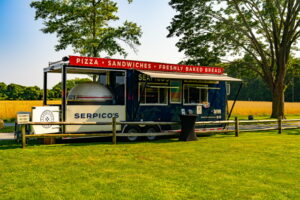
That consistency is what allows a mobile pizza kitchen to feel effortless during a private event.
Why we don’t offer 30 toppings
We believe great ingredients deserve restraint.
When everything is available, nothing feels special. When fewer options are presented well, guests engage more deeply.
That’s not limitation—it’s confidence.
Frequently Asked Questions About Limited Pizza Menus
Why do fewer pizza options create a better experience?
Fewer pizza options reduce decision fatigue and help guests focus on enjoying the food and the moment. When choices are curated, guests feel guided rather than overwhelmed, which leads to a calmer, more enjoyable dining experience.
Does a smaller pizza menu limit variety?
Not at all. A smaller menu allows for better balance and pacing. Instead of endless toppings, variety comes from different doughs, styles, and thoughtful combinations that work together.
Is a limited menu better for private events?
Yes. For private events, a focused pizza menu improves flow, consistency, and timing. It allows a mobile pizza kitchen to serve guests efficiently while maintaining high quality throughout the event.
Do guests ever want more choices?
Occasionally—but far more often, guests appreciate not having to decide. Trusting the maker removes pressure and lets the experience unfold naturally.
Why intention matters more than variety
When a menu is intentionally limited, it creates confidence—not just for the maker, but for the guest. Fewer pizza options signal that each choice has been tested, refined, and selected for a reason. Instead of scanning a long list and second-guessing, guests lean in and trust the experience. This approach also allows a mobile pizza kitchen to execute at a higher level, maintaining consistency in dough handling, bake quality, and timing throughout an event. In the end, intention replaces overwhelm, and simplicity becomes a form of hospitality rather than a restriction.
The takeaway
More options don’t create better experiences. Better decisions do.
When menus are intentional, food becomes memorable—and guests feel taken care of.
That’s the experience we’re interested in creating.
Written by Jim Serpico
Jim Serpico is the founder of Serpico’s Bread Co. and a former television producer turned professional bread and pizza maker. He focuses on thoughtful menu design, shared food experiences, and intentional hospitality.
Curious what an intentional pizza experience feels like?
Discover our pizza tasting menus and private events and see how simplicity elevates the table.